Bitcoin Academy: Part 6
The Road Ahead: Opportunities And Threats
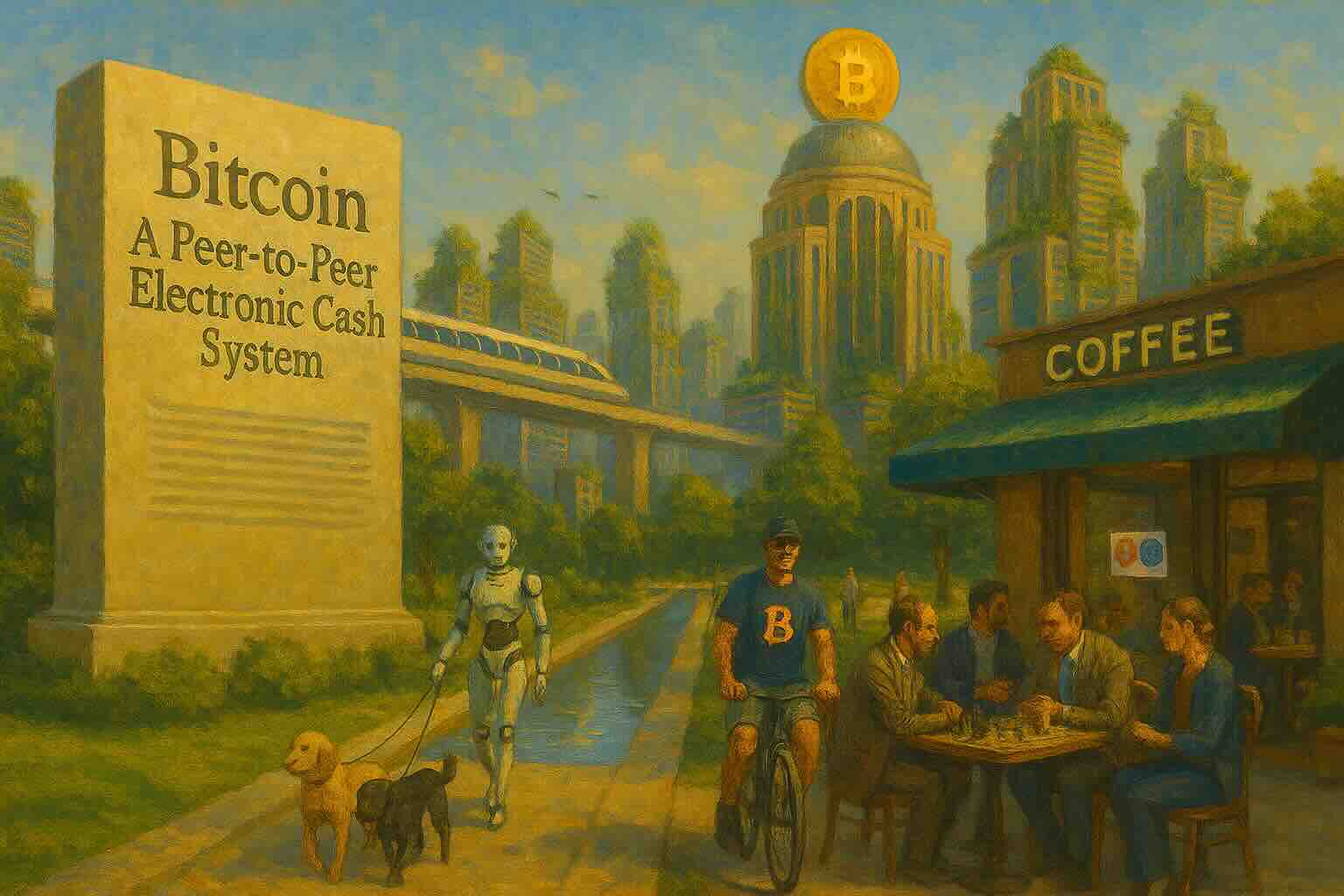
As we conclude our Bitcoin Academy series, it’s worth stepping back and looking to the horizon for this new digital nation. Below we sketch the main openings for growth and the hurdles that could slow progress.
Opportunities
* Increased scaling and throughput. If scaling solutions like Bitcoin’s Lightning Network keep improving, people will be able to send money across borders almost instantly and for just a few cents. That speed and low cost could help the unbanked and chip away at today’s pricey remittance services.
* Exchange-traded funds will bring price stability. The arrival of exchange‑traded funds lets large pension plans and ordinary retirement accounts buy bitcoin as easily as they buy any stock. Onboarding these deeper pools of steady capital should help smooth out Bitcoin’s historically wild price swings.
* A digital hedge against inflation. The fixed 21 million unit supply gives Bitcoin a built‑in appeal as an inflation hedge. As Bitcoin’s adoption and influence grows, savers in economies with poorly managed currencies may move into Bitcoin knowing no one can create more of it at will.
* Upcoming generations may boost adoption. Younger, digital‑first generations are coming of age with smartphones in hand. As their spending and investing power rises, everyday Bitcoin saving and spending could rise with them.
Threats And Challenges
* Continued adoption is not guaranteed. If second‑layer tools such as the Lightning Network fail to scale quickly—or if miners one day earn too little to keep the chain secure—users could migrate to faster or cheaper networks.
* Tough regulation is a wild card. Outright bans or tight controls in big economies are not off the table. While those hurdles might not kill Bitcoin, they could fracture its markets and slow momentum.
* Technological shifts pose risks. A breakthrough in quantum computing could weaken today’s standard encryption. Developers need to stay aware of these new technologies and ensure Bitcoin’s security defenses are upgraded in time.
* Bitcoin’s heavy energy use continues to draw criticism. Expanding renewable power and squeezing more efficiency from mining operations will be essential to ease public concern, political pressure, and tension with other power-heavy consumers like AI data center operators.
What’s Next? Bitcoin’s Resilience Makes Us Optimistic About Its Future
With the above points in mind, you may wonder where Triple Point Strategy stands on Bitcoin. The answer is that we’re optimistic. We ultimately believe in Bitcoin because of its resilient fundamentals.
Throughout this series, we’ve noted that Bitcoin was designed with a clear vision: to be a decentralized, secure form of money, and it has remained true to that principle through adversity. Its protocol rules enforce scarcity and security in a way no other asset does, giving it a unique place in a world of proliferating fiat money and fragile financial systems. Bitcoin’s resilience to technological, economic, and political shocks has strengthened our confidence that it can weather future storms. Each major threat we discussed, whether a hack, a ban, or a contentious fork, ultimately ended with Bitcoin bouncing back, often even stronger. This durability is no accident; it stems from Bitcoin’s decentralized architecture and the passionate global community that sustains it.
We also see that Bitcoin’s narrative has broadened, not narrowed, over time. It started as niche electronic cash for the internet, then became seen as digital gold, and now it’s being considered for roles in remittances, national reserves, and fintech innovation. Such adaptability while maintaining core integrity is rare. It suggests that Bitcoin can continue finding relevance in different economic climates and use cases.
At Triple Point Strategy, our mission is to bring clarity to complexity, and Bitcoin, though technically intricate, offers a straightforward value proposition: money that no central authority controls and anyone can use. In a world where trust in institutions rises and falls, Bitcoin provides an alternative rooted in mathematics and consensus. We believe this proposition will only grow more compelling over time. Bitcoin represents a new form of sovereignty based on technology and collective agreement, and its evolution is likely to be one of the defining narratives in finance for decades, and perhaps centuries, to come.