Most shares of stock come with a set of legally protected rights: an entitlement to any dividends, a vote in shareholder decisions, and a residual claim to any assets if the entity were sold or wound down. For tokens, a crypto application or protocol's native asset, those protections do not exist.
This has been an issue the crypto industry has been dealing with for the better part of a decade, and it raises an uncomfortable question. If tokens don’t have a claim on the value that’s generated, why hold the asset at all?
This gap has historically led to speculation driving prices higher and it is a reason why many tokens have been unable to retain much of their value across crypto cycles. The good news, however, is that the crypto industry is maturing. We’re seeing value being driven to both new and established tokens through a simple mechanism, the buyback model.
How we got here
The value accrual issue traces back to 2017, when a wave of new crypto projects raised money by selling tokens directly to the public. They did this through an initial coin offering or “ICO.” The structure looked a lot like an IPO but without the disclosures and investor protections that come with a stock offering. Anyone could write a whitepaper, offer to sell a token, and raise millions of dollars.
The result was the industry's wild-west era. At the time, token prices were largely disconnected from any real value accrual and, unfortunately, many investors lost money in the process. By 2021, plenty of project teams wanted the value accrual problem to be fixed. By designing better tokenomics, the rules dictating the relationship between a token and its application or protocol, the teams could ensure that value was being routed back to token holders. Unfortunately, the early 2020s were when making such a change was actually the hardest to try.
Under Chair Gary Gensler, the SEC took the position that most tokens were unregistered securities, and it brought over 100 enforcement actions to back that up. This included lawsuits against Coinbase, Binance, Ripple Labs, and Kraken. The clearest way to fix the value accrual problem was to send an application or protocol's revenue to its token. This was also an easy way to look exactly like the security regulators were hunting for. So even teams that knew how to solve the problem avoided doing so out of fear of regulatory scrutiny.
A window opens
Things started to change in 2025 when a new SEC chair brought a friendlier posture to the crypto industry. Teams that had spent years building durable revenue finally had an opening to improve the alignment between their token and token holders.
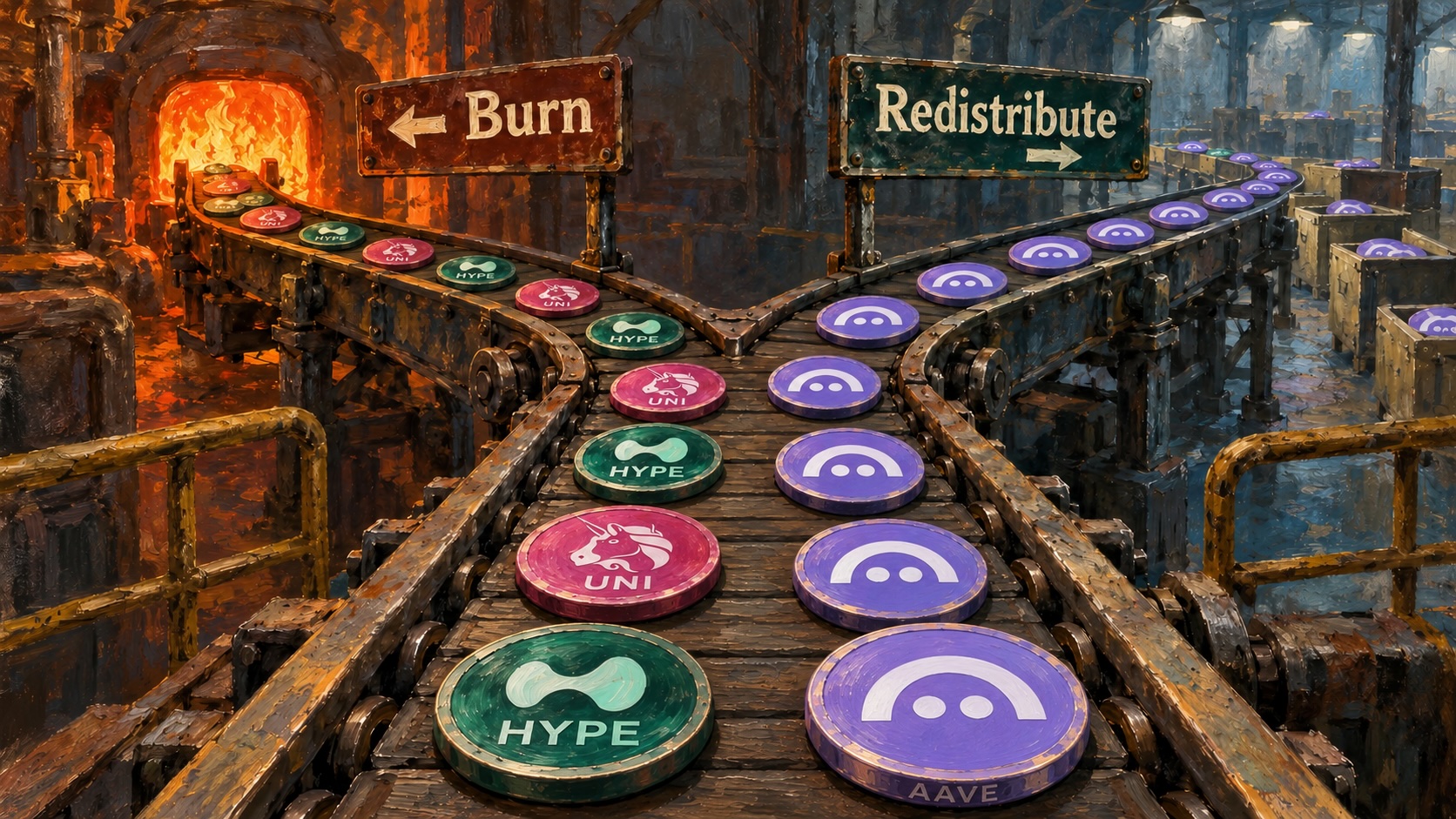
The mechanism to route value to token holders is straightforward. A protocol or application uses revenue to buy its token on the open market. This creates consistent demand for the asset. Once purchased, teams do one of two things:
- Burn the token: Purchased tokens are destroyed, the crypto equivalent of a company buying back its own stock and retiring the shares permanently.
- Redistribute the token: Purchased tokens are sent to people who stake (i.e lock up their tokens for a reward), rather than being destroyed. This directs value to committed holders, functioning more like a dividend.
Whether burning or redistributing is the better approach can be debated. However, both ways ultimately ensure token holders benefit from the value being created by the projects they've backed.
What it means for investors
The shift toward directing value to token holders is a significant step in the right direction for the crypto industry. Hyperliquid has burned close to 5% of the total HYPE token supply since its late 2024 launch. Uniswap's burn rate has moved from roughly $90 million to over $250 million annualized in just the past few weeks. This comes as trading volume on new integrations has accelerated, and it clearly shows that these burns are a direct function of usage.
While a protocol that burns tokens is a positive sign from an investment perspective, it isn't the end-all-be-all. Burns move with revenue, so a slowdown in usage shows up directly as a slowdown in burns. Investors should be thinking about the durability of that revenue growth, not just admiring the current pace. It's also worth looking past the burn number to the rate at which new tokens are hitting the market. This comes through insider unlocks or ongoing emissions which offset the burn rate.
Wrap up
Many crypto tokens started out looking a lot like securities based on the way they were initially offered to the public. Despite many years without a clear value accrual mechanism, we are finally seeing a much-needed shift in the way project teams approach their tokenomics.
As institutional investors increasingly allocate to digital assets, the buyback mechanism offers a way to apply traditional valuation metrics to this emerging asset class. Our belief is that this kind of durable, revenue-backed alignment is what separates a token with a real investment case from one based on hope and hype.
One thing to keep in mind is that everything discussed thus far is based on a discretionary decision. There is nothing legally forcing a project team to route revenue to the token. It's unclear whether token holders will ever get the same protections as shareholders; however, our hope is that as the asset class matures, investor protections will mature with it.