
Key Takeaways
Bitcoin is emerging as a strategic reserve asset for corporations and governments, with institutional adoption still in its early innings and significant upside remaining.
Ethereum is positioned to follow, offering a yield-bearing alternative with growing traction from major financial players and tokenization infrastructure.
Adoption is accelerating across corporate and government balance sheets, driven by real-world case studies, favorable legislation, and a shifting macro landscape.
This moment offers a unique advantage for individual investors—to act ahead of the institutional curve and capture asymmetric returns before broader adoption makes it consensus.
Opportunity Advertised In Plain Sight
If you were browsing Reddit in 2013, you might have stumbled upon this crude drawing of a wizard. It was an ad for Reddit’s Bitcoin subreddit, and most people would have reasonably scrolled by without giving it much thought. Those who decided to learn more about the technology however had a chance to make a potentially life changing investment.
 Around that time a single Bitcoin was trading for $26, and a $1,000 investment made back then would be worth about $4 million today. Looking at Bitcoin’s market capitalization, it’s easy to feel like you’re late to the party. A single Bitcoin is now trading at over $100,000. Despite the parabolic growth, there are signals suggesting that you are not late to the party. In fact, it is actually just getting started.
Stronger Demand Signals Than Ever
The signs of opportunity are louder and clearer than they have ever been. You don’t need to hope you’ll stumble into the next life changing investment on Reddit. If you read the headlines on CNBC and other financial news outlets, the next investment megatrend seems pretty clear: Crypto will become a standard reserve asset on almost every corporate and government balance sheet.
Right now, Bitcoin is the most likely cryptocurrency to achieve that accolade. We don’t think it will be the only one, but we’ll cover that in more detail later. Arguing this for Bitcoin isn’t a particularly wild call to make. The fundamentals make sense and we are already seeing it play out in the market.
Why Add Bitcoin To The Balance Sheet?
“Bitcoin is digital gold” is the phrase you’ll most often hear when someone is making a case for it to be on the balance sheet. The thesis here is that Bitcoin is positioned well to become a credible hedge against currency devaluation and systemic risk just like gold. We acknowledge that Bitcoin doesn’t have the same intrinsic value as gold. With that being said, Bitcoin does have several properties where it is better than gold:
Known Scarcity = Predicable Store of Value
Bitcoin has a fixed supply of 21 million units, whereas the total supply of gold is still unknown. For a balance sheet, this offers long-term predictability and the protection of purchasing power.Portability = Operational Flexibility
$100 million in Bitcoin can be moved across borders or between custodians in minutes. Moving $100 million in gold requires a fork lift and logistical overhead. Bitcoin is not just convenient, it reduces costs, enhances mobility, and ensures sovereign or corporate reserves can be rebalanced quickly in times of crisis.Verifiability = Auditability and Compliance
Every unit of Bitcoin can be independently verified on the blockchain. This enables real-time auditability and transparency, which is key for both compliance and third party deals.Asymmetrical Upside = Long-Term Strategic Alpha
Gold is already a $20 trillion market. Bitcoin, at around $2 trillion, has significantly more upside if it reaches even partial parity to gold.Global Neutrality = Strategic Sovereign Hedge
Bitcoin is not controlled by any country, central bank, or corporate entity. In an increasingly multipolar world, this neutrality makes it an appealing strategic asset for countries seeking to diversify away from USD hegemony or for corporations exposed to geopolitical volatility.
If the thesis holds true and Bitcoin does become digital gold, then treasurers managing multi-billion-dollar balance sheets have a risk-aware way to capture long-term upside. At the same time they can also hedge against monetary debasement and systemic risk. These benefits aren’t just a concept. We are already seeing corporations take advantage of what Bitcoin has to offer when it is added to the balance sheet.
Corporations Are Already Adopting The Strategy
Adding Bitcoin to the corporate balance sheet is not just an idea, it's being seen as a viable business strategy. MicroStrategy is currently the poster child for how a Bitcoin-focused reserve asset strategy can pay off. It was a declining software business that began accumulating Bitcoin in August 2020 and has grown to accumulate over $63 billion in holdings. The company’s market capitalization is up almost 3,000% since it implemented the strategy, and its CEO shows no signs of slowing down.
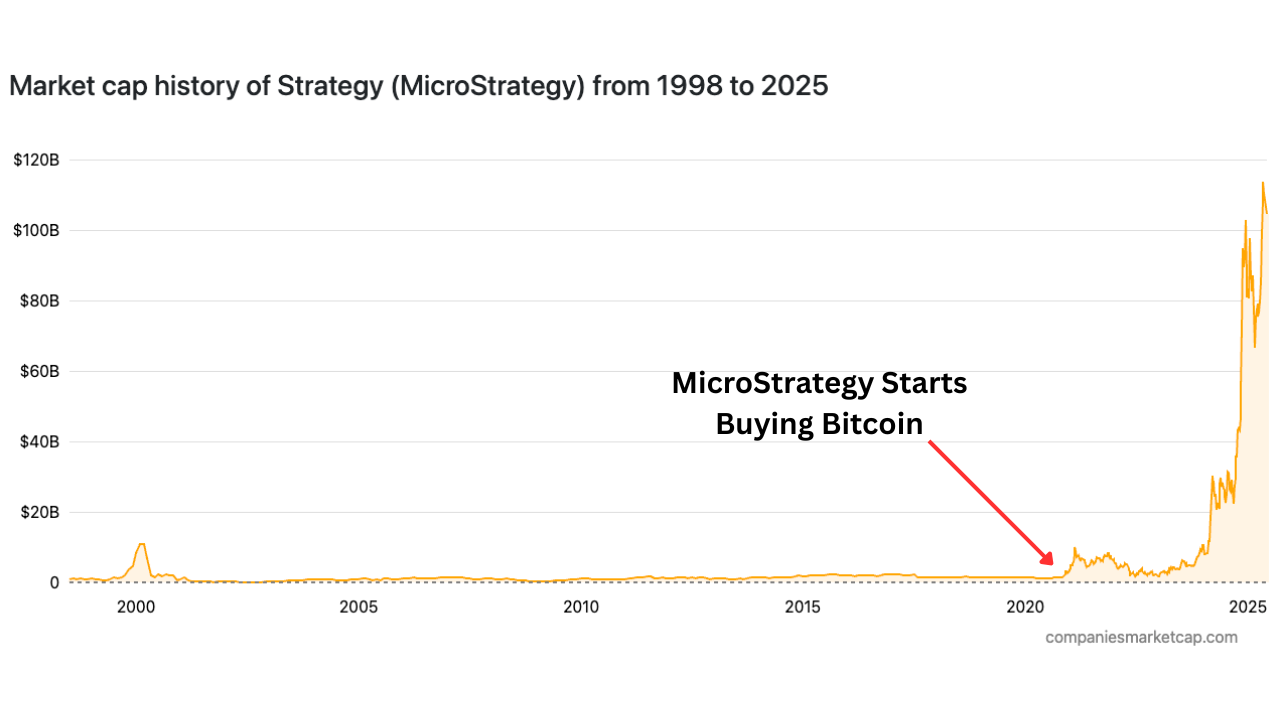 MicroStrategy has since mostly transitioned to a “Bitcoin Treasury Company” where it primarily delivers shareholder value by buying and holding Bitcoin. Metaplanet Inc., a declining Japanese hotel management company, took note of MicroStrategy’s success. It started buying Bitcoin at the end of 2024 and has since completely reoriented the company. Now every decision at Metaplanet aims to maximize the Bitcoin holdings per share. The change is paying off with its market capitalization up 138X since making the pivot.
.png "MetaPlanet Market Cap Over Time")
It's hard to overstate just how much of a game changer MicroStrategy’s playbook has become. With that being said, turnaround companies aren’t the only ones that are adding Bitcoin to the balance sheet. Tesla, Coinbase, and Block (formally Square) are just a few examples of more than 70 other corporations that hold Bitcoin.
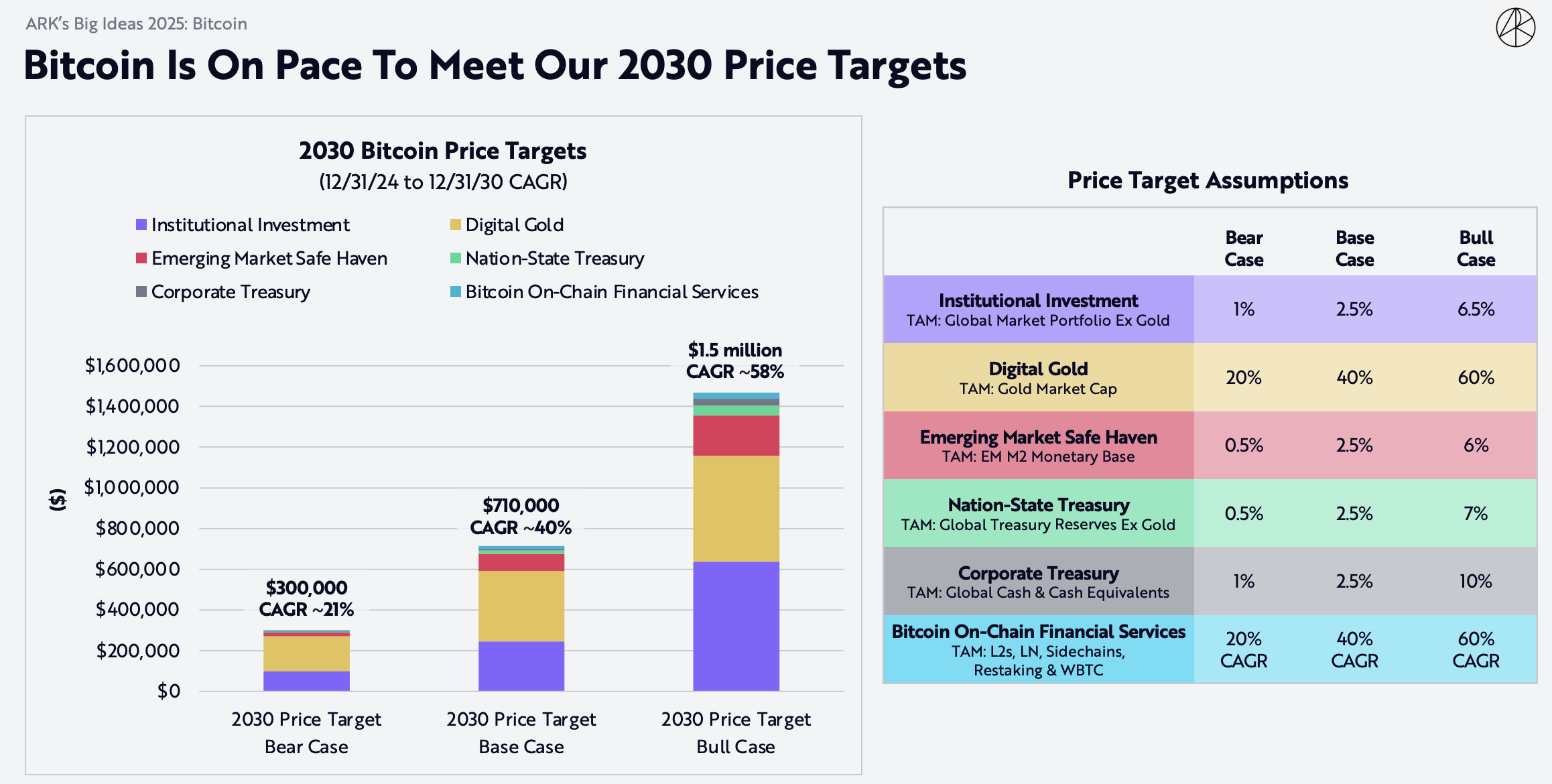
We expect the amount of capital that firms are allocating to Bitcoin to grow and are not the only ones who believe it. Bernstein Research estimates there will be $330 billion in corporate Bitcoin inflows by 2029. Ark Invest’s Big Ideas 2025 report projects that Bitcoin could wind up accounting for 1-10% of global corporate treasuries by 2030. If the high end of that target is reached, we may see a single Bitcoin trade at $1,500,000.
The Case For A Snowball Effect
We don’t expect megacap stocks like Amazon or Microsoft to start adding Bitcoin to their balance sheet in the near-term. This is because there is no catalyst forcing them to implement such a strategy. In fact, Microsoft shareholders rejected a proposal to do so at the end of 2024.
Right now, the ideal company to buy Bitcoin is one with a declining or stagnant business model. Gamestop is a great example. It sold $1.5 billion in convertible debt back in March 2025 for the purposes of buying Bitcoin. So far it has used approximately $500 million of those proceeds to buy 4,710 Bitcoins.
As new companies start to buy and hold Bitcoin, its price should naturally rise from increased demand and limited supply. We expect the combination of price appreciation, and potential for enterprise value accrual, to encourage the next incremental CEO with a slowing business to buy in. This has the ability to start a snowball effect of new corporate buyers and upward price pressure. At some tipping point shareholders will expect Bitcoin to be on the balance sheet at which point our prediction will have come true.
Governments Are Getting In On The Action
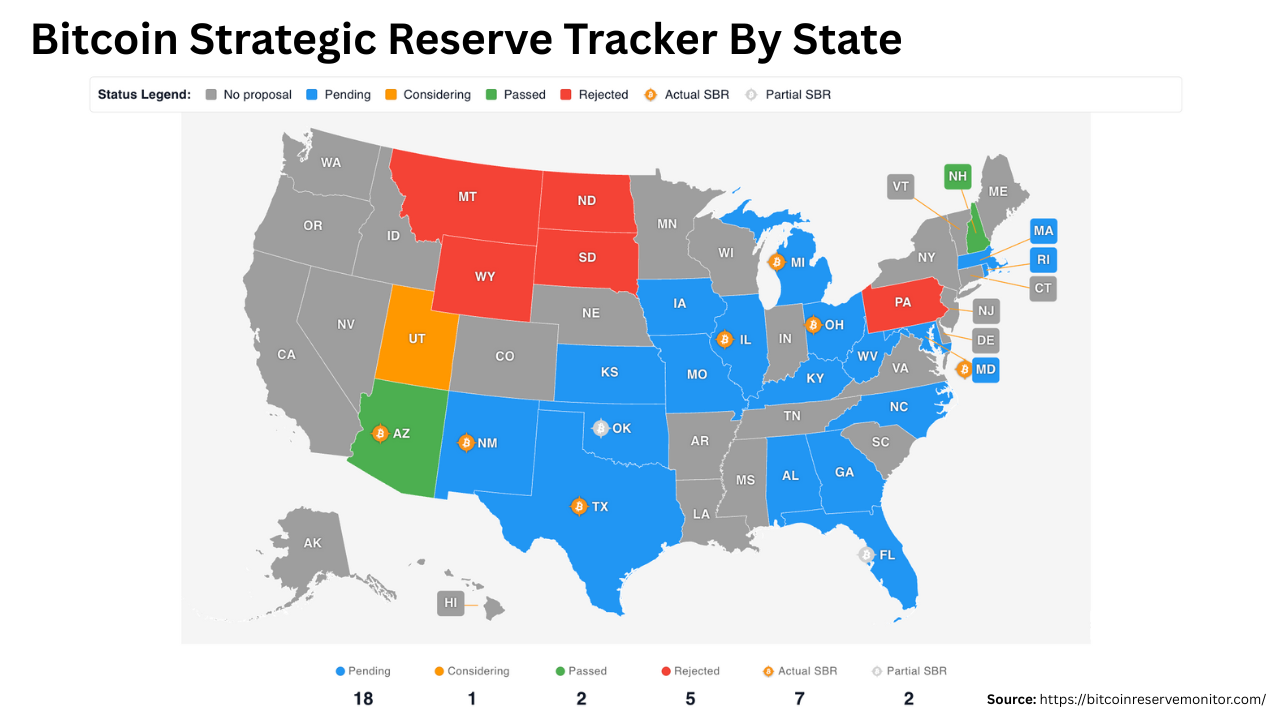
Corporations aren’t the only entities interested in accumulating Bitcoin. U.S. federal and state governments are putting forward legislation to make it legal for them to hold Bitcoin as a reserve asset. In March 2025, the Trump administration announced an executive order to create a Strategic Bitcoin Reserve and a US Digital Asset Stockpile. The BITCOIN Act of 2025 takes that executive order a step further and aims to codify the Strategic Bitcoin Reserve into law.
At the state level, New Hampshire and Arizona have successfully passed legislation that allows them to hold digital assets. Texas’ bill has passed the House of Representatives and is awaiting signature from governor Greg Abbott. There are 17 other states which are currently pushing digital asset bills through the legislative process.
The U.S. isn’t the only country thinking about Bitcoin as a strategic asset. Pakistan announced its intentions to create a strategic Bitcoin reserve at the Bitcoin 2025 conference. Brazil is currently working on legislation for a Bitcoin strategic reserve. Poland, Switzerland, and other European countries have also been discussing the potential to create these digital asset reserves.
Ark Invest estimates that nation-states could hold 0.5%-7% of their treasury in Bitcoin by 2030. Similar to corporate purchases, government purchases of Bitcoin appear set up for a snowball effect too. If we start to see more momentum for countries to buy Bitcoin, it’s possible to see how a global arms race could be sparked to secure as much of the asset as possible.
Ethereum Could Be Next
While most of the institutional momentum today is focused on Bitcoin, another high-potential reserve asset is emerging: Ethereum. As the second largest cryptocurrency by market capitalization, Ethereum is a foundational layer for what many believe is the future of finance. We believe Ethereum has several properties that give it a credible path to join Bitcoin on corporate and government balance sheets.
Highly Decentralized & Reliable = Asset Sovereignty Without Fragility
Like Bitcoin, Ethereum’s decentralization makes it nearly impossible for any government or actor to seize, freeze, or censor transactions. Ethereum has also never experienced an outage since launching in 2015, despite continued and highly complex upgrades on the network. This level of decentralization and uptime is key for both sovereign or institutional treasury use.Large Market Capitalization = Institutional Eligibility
For Texas and New Hampshire, only cryptocurrencies with a market capitalization above $500 billion are eligible to be held on their balance sheets. Bitcoin is currently the only asset that qualifies. Ethereum has a market capitalization of around $300 billion. If Ethereum crosses that threshold, and other governments follow similar guidance, it becomes the only Bitcoin alternative to a pool of government buyers.Institutional Adoption = Growing Validation
BlackRock, the world’s largest asset manager, has tokenized over $2.5 billion in assets for its BUIDL fund on Ethereum. This is a serious endorsement and a strong signal to other financial institutions on where to build their own tokenized financial products. Firms choosing to build on Ethereum have good reason to hold the core asset that is needed to interact with the ecosystem.Natively Productive = A Crypto Treasury Bond Equivalent
Unlike Bitcoin, Ethereum is yield-bearing like a government bond or dividend stock. For entities seeking a mix of income generation and capital appreciation, Ethereum offers a structurally different and complementary profile to Bitcoin.Programmatic Monetary Policy = Digital Inflation Hedge with Flexibility
Ethereum doesn’t have a fixed supply like Bitcoin, however it does have a dynamic monetary policy. The rate of issuance is algorithmically adjusted based on network activity, and in periods of high usage Ethereum can become net deflationary. This creates a flexible, yet transparent hedge against inflation and aligns well with long-term reserve principles.
Similarly to Bitcoin, Ethereum is already being added to corporate and government balance sheets. Coinbase, the state of Michigan, and several other crypto-focused companies currently hold approximately $2.5 billion of Ethereum on their balance sheets. In May 2025, SharpLink Gaming announced it had raised $425 million to make a similar transition as MicroStrategy and Metaplanet. However in this case, SharpLink Gaming plans to purchase Ethereum instead of Bitcoin. It has also announced plans to sell $1 billion in new stock with the sole purpose of buying Ethereum.
As noted previously, in the near-term we expect most companies and governments to be adding Bitcoin to their balance sheet. With that being said, we also have strong conviction over a 5 year time horizon that more capital will be allocated to Ethereum as a strategic reserve asset.
Where The Thesis Could Break
It should be clear that we have strong conviction in Bitcoin and Ethereum’s ability to become strategic reserve assets. However, no thesis is bullet proof and it's critical to consider where things might break. Risks we will be watching for include:
Legislative & Regulatory Changes
While the U.S. federal government and regulatory bodies (e.g. SEC) are currently taking steps toward crypto acceptance, a future administration or globally coordinated regulatory effort could create hostile conditions. Aggressive capital controls, excessive taxation, or constraints on corporate treasury exposure to digital assets could significantly hamper adoption in the U.S.Bitcoin’s Ability To Adapt To Protocol Risks
Bitcoin has operated flawlessly for 15+ years; however since nobody owns the network any major changes to the protocol require broad social consensus. Historically we’ve seen seemingly small changes, such as an increase in block size, struck down by Bitcoin’s Core Developer community. Quantum computing and a shrinking security budget are also real upcoming threats that need solutions. The Bitcoin community must decide where it is willing to concede on the original Bitcoin vision in order to stay relevant.Security Breaches & Custodial Risk
Despite the inherent security of blockchain technology, the ecosystem around it is still evolving. Major hacks of exchanges, custodial services, or corporate wallets could erode confidence in holding digital assets, particularly for risk-averse treasuries. While corporations and governments would likely use highly secure, regulated custodians, a significant and widespread security event could create a chilling effect on adoption.
Despite the risks that have been outlined above, we are incredibly optimistic on the future of Bitcoin and Ethereum as reserve assets on both corporate and government balance sheets.
Front Run Their Balance Sheet With Your Own
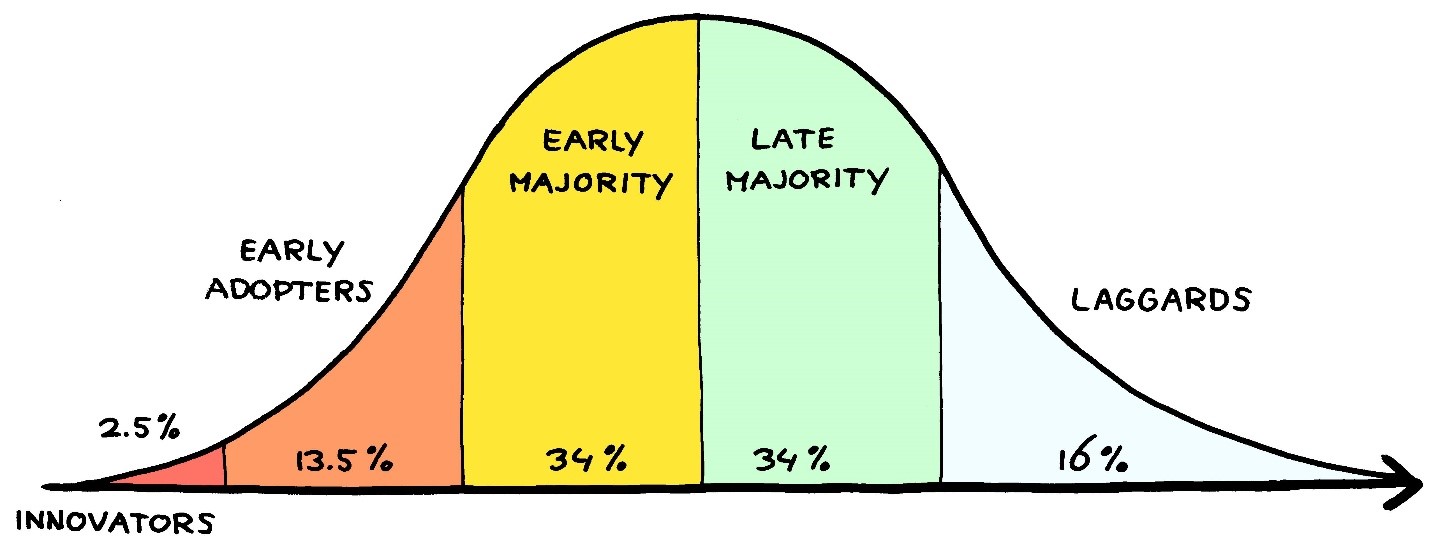
When it comes to adding crypto to the balance sheet, we are at a special moment in time. We are clearly in the innovators portion of the adoption curve, however the writing is on the wall that billions (if not trillions) of dollars will be poured into Bitcoin and Ethereum over time.
Corporations and governments have to go through formal processes and bureaucratic red tape to add digital assets to their balance sheets. You as an individual do not. So if you believe in the thesis, here is your opportunity to get ahead of the next big wave of demand.
About Triple Point Strategy
Triple Point Strategy is a research firm and crypto investment manager. We operate the Marietta DeFi Fund, a crypto investment fund that is focused on capital appreciation and DeFi-native income strategies. It is currently available to U.S. accredited investors. Subscribe below to receive our latest insights directly in your inbox.
For U.S. accredited investors only. Offered under Rule 506(c) of Regulation D. This content is for informational purposes only and does not constitute financial, investment, or tax advice. This is not an offer to sell or a solicitation to buy any security. Any investment may only be made through the Fund's confidential offering documents. Investing involves risk, including possible loss of capital. Digital assets are volatile and subject to changing regulations.