
May 2026 Crypto Market Recap
The CLARITY Act Clears Senate Banking Committee

On May 14, 2026, the Senate Banking Committee advanced H.R. 3633, the Digital Asset Market CLARITY Act, in a 15-9 vote that broke four months of legislative deadlock. All 13 Republicans were joined by Democratic Senators Angela Alsobrooks and Ruben Gallego after a last-minute deal was struck minutes into the hearing. The bill gives the CFTC jurisdiction over decentralized digital commodities, the SEC authority over digital securities, and continues GENIUS Act treatment for stablecoins. It also creates safe harbors for DeFi developers writing open-source code and a certification pathway for token issuers. The path forward involves merging with the Senate Agriculture Committee's parallel version, a 60-vote Senate floor vote, and final reconciliation with the House bill that passed last July. The White House is targeting a July 4 signing.
Our Take
Clearing the Senate Banking Committee was the single hardest gate this legislation faced. With Ranking Member Elizabeth Warren as crypto's most vocal Senate opponent, and months of stalled negotiation, a party-line outcome was the consensus expectation. The bipartisan 15-9 vote shifted that calculus. With the toughest structural barrier behind it, passage probability has improved meaningfully, even with floor fights on ethics and illicit finance still ahead.
Beyond the procedural significance, passage is a major unlock for institutional capital. Banks and asset managers have largely stayed on the sidelines because regulatory ambiguity made the legal risk hard to underwrite. CLARITY removes that. Once law, banks gain a federal pathway to custody, trading, and payments, and asset managers gain a stable framework to build products against. JPMorgan and other major analysts now see meaningful H2 2026 institutional inflows as their base case if the bill clears.
Japan Opens Its Payment System to Foreign Stablecoins

Japan is opening its payment system to foreign-issued stablecoins for the first time. On May 19, 2026, the Financial Services Agency finalized rules allowing certain overseas stablecoins to circulate inside Japan as legally recognized payment instruments, effective June 1. Until now, only Japan-based banks, trust companies, and licensed money-transfer firms could issue stablecoins for domestic use.
The opening comes with strict conditions. Only "trust-type" stablecoins qualify, meaning tokens fully backed by reserves held in a trust structure and redeemable at face value. Foreign issuers must also clear Japan's equivalence standards on regulatory oversight and AML controls, and distribution still routes through registered Japanese intermediaries. Circle is best positioned through its existing joint venture with SBI Holdings and is already preparing USDC services ahead of June 1.
Our Take
Asia is where the stablecoin opportunity is structurally largest. The region has the world's biggest remittance corridors, deep dollar-denominated trade flows, and rising treasury demand for tokenized cash. Each of these works better on stablecoin rails than on legacy banking infrastructure.
Japan's June 1 opening matters as the first usable regulatory template for capturing that opportunity. Tokyo is one of Asia's most tightly regulated crypto markets, and other regulators routinely study and adapt frameworks that work there. By codifying an equivalence-based pathway for foreign-issued stablecoins, Japan has created a model that others can reference and issuers can plan against. The June 1 effective date could mark the start of a regional unlock.
DTCC Puts Tokenized Securities on a Live Timeline
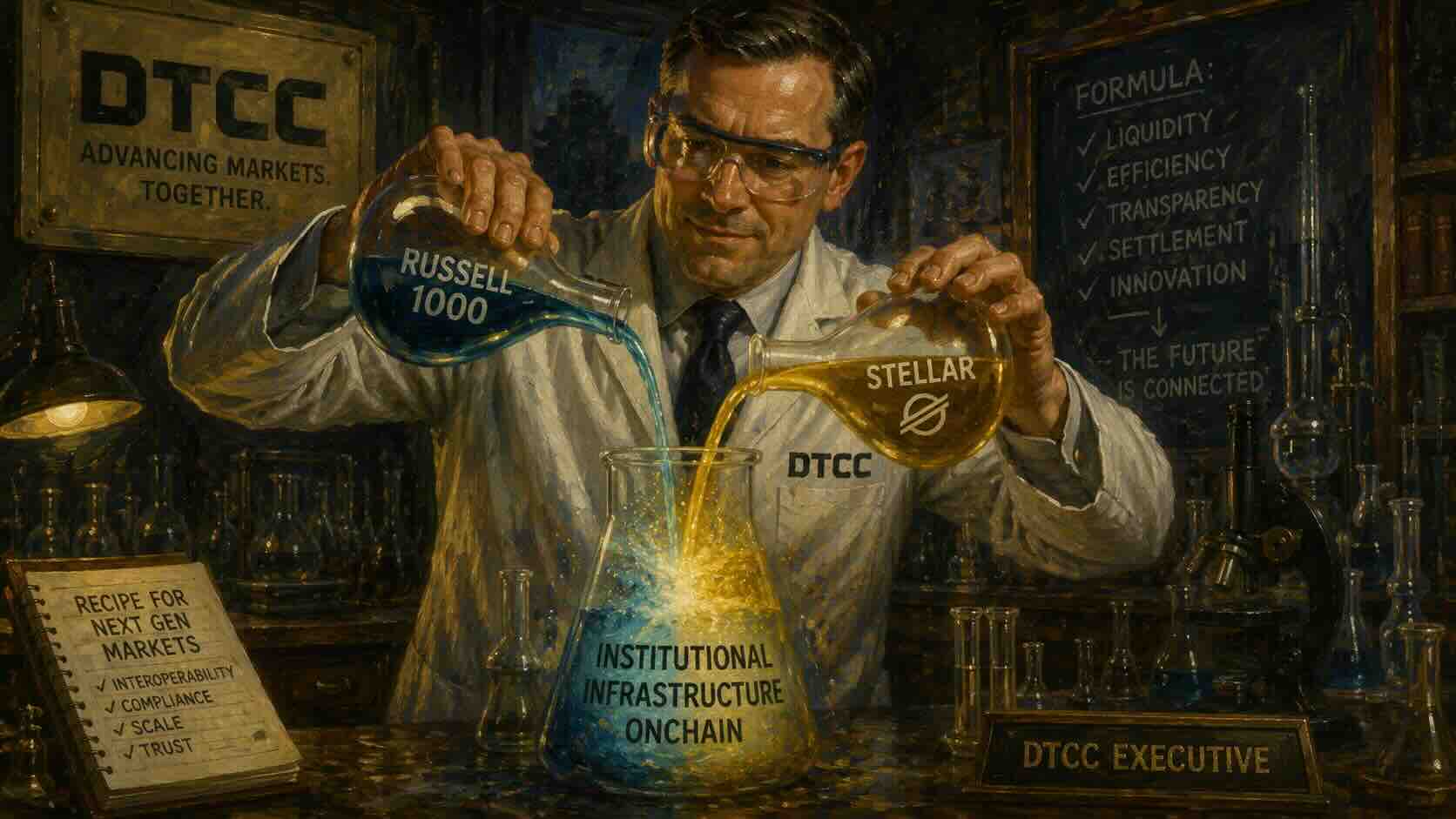
At the beginning of May, the DTCC announced it will begin limited production trades of tokenized real-world assets starting in July 2026. A full service launch will follow in October. The service covers assets already held in DTC custody, including Russell 1000 stocks, major index ETFs, and U.S. Treasuries. More than 50 firms, including BlackRock, Goldman Sachs, JPMorgan, and Circle, have joined the DTCC's Industry Working Group to advise on the service’s roll out. On May 27, the DTCC went one step further and announced a partnership with the Stellar Development Foundation to bring tokenized assets to the Stellar network by H1 2027. This marks the first commitment to bring DTC-custodied securities to a fully public blockchain.
Our Take
For years, a central debate within the crypto industry has been whether legacy financial institutions would ever actually deploy on public blockchains. The Stellar announcement addresses this head on, demonstrating that compliant, regulated trading can happen on open infrastructure. What’s equally notable is the DTCC's multi-chain approach. Rather than picking a single blockchain, it is building the capabilities that will allow these assets to span both permissioned and public networks. Support for other public blockchains, like Ethereum, are expected to follow. We’ve said before that traditional finance and crypto are converging. A $114 trillion institution has just announced it agrees.
About Triple Point Strategy
Triple Point Strategy is a research firm and crypto investment manager. We operate the Marietta DeFi Fund, a crypto investment fund that is focused on capital appreciation and DeFi-native income strategies. It is currently available to U.S. accredited investors. Subscribe below to receive our latest insights directly in your inbox.
For U.S. accredited investors only. Offered under Rule 506(c) of Regulation D. This content is for informational purposes only and does not constitute financial, investment, or tax advice. This is not an offer to sell or a solicitation to buy any security. Any investment may only be made through the Fund's confidential offering documents. Investing involves risk, including possible loss of capital. Digital assets are volatile and subject to changing regulations.