
Fidelity Launches Its Own Digital Dollar On Ethereum

Fidelity Investments, the $6.4 trillion asset manager, is launching its first stablecoin. Called the Fidelity Digital Dollar (FIDD), the token will run on Ethereum and is expected to go live in early February. Fidelity Digital Assets, a federally chartered national bank, will issue FIDD. The stablecoin will be redeemable at one dollar across Fidelity's crypto platforms and will also be supported on third-party exchanges. Because it operates on Ethereum mainnet, FIDD can also be sent to external wallets and used in DeFi applications.
Fidelity confirmed that reserves backing FIDD will include cash, cash equivalents, and short-term U.S. Treasuries, in line with the reserve standards established by the GENIUS Act. The company plans to publish daily disclosures of coin issuance and reserve values, along with periodic third-party attestations. In announcing the launch, Fidelity framed the stablecoin as a building block for future onchain financial products, noting that it positions the firm to offer broader services built on blockchain infrastructure.
Our Take
Fidelity's stablecoin launch is a vote of confidence in Ethereum and a signal about where institutional crypto adoption is heading. Fidelity did not have to choose Ethereum. It could have launched on Solana for lower fees, opted for a permissioned chain, or waited for a purpose-built institutional network. Instead, it picked the public blockchain that underpins most of DeFi. That choice reflects how traditional finance now evaluates crypto infrastructure: liquidity, security, and composability matter more than speed and cost. Ethereum leads on all three.
The pattern here is consistent. BlackRock's tokenized fund launched on Ethereum. Franklin Templeton's tokenized money market fund runs on Ethereum. Now Fidelity's stablecoin joins them. Each new entrant reinforces the network's liquidity advantage and makes it more attractive for the next issuer. For regulated stablecoins backed by major financial institutions, Ethereum is consolidating its lead, and Fidelity's entry accelerates that trend.
NYSE & Robinhood Announce 24/7 Tokenized Trading Platforms

January brought two major announcements signaling the end of traditional market hours. On January 19th, the New York Stock Exchange announced plans for a blockchain-based venue enabling around-the-clock trading of tokenized stocks and ETFs. The platform will combine the NYSE's existing matching engine with blockchain post-trade infrastructure, supporting instant settlement, fractional shares, and stablecoin-based funding. The NYSE's parent company, Intercontinental Exchange, is also working with BNY and Citi to support tokenized deposits across its clearinghouses for transfers outside banking hours.
Ten days later, Robinhood CEO Vlad Tenev unveiled his own vision for blockchain-based stock trading, framing it explicitly as a response to the 2021 GameStop crisis. By eliminating settlement delays through tokenization, Tenev argued that "the trading restrictions of 2021 will never happen again." Robinhood already offers over 2,000 stock tokens for its European customers via Ethereum L2 “Arbitrum,” providing exposure to price movements and dividends for U.S.-listed equities. While currently operating on a 24/5 schedule, the company plans to roll out full 24/7 trading and self-custody in the coming months. This will allow users to withdraw tokenized stocks to their own wallets and potentially use them as collateral within decentralized finance applications.
Our Take
For crypto investors, the signal here is validation rather than immediate opportunity. The core value propositions that crypto has championed for years, 24/7 markets, instant settlement, programmable assets, are now being adopted by legacy institutions and FinTechs as competition increases. That's meaningful directionally, but the benefits to specific crypto holdings will depend on which infrastructure gets selected.
Robinhood's choice to use Arbitrum is notable. If tokenized equities drive meaningful volume through Ethereum L2s, that creates sustained demand for Ethereum blockspace and could strengthen the economic case for ETH as a settlement layer. While the potential impact from Robinhood’s announcement seems clear, the same can not be said for the NYSE.
The NYSE’s technology stack has not yet been disclosed, and there's no guarantee that public blockchains will be the winners here. It's possible the NYSE will select a permissioned blockchain or a hybrid solution like Canton Network. Until we get more details, the takeaway is that traditional finance is building toward a future that looks a lot like crypto's present. With the right bets, crypto allocators stand to gain from investing in tokens that will accrue value from these new sources of network activity.
SEC Issues Framework For Tokenized Securities
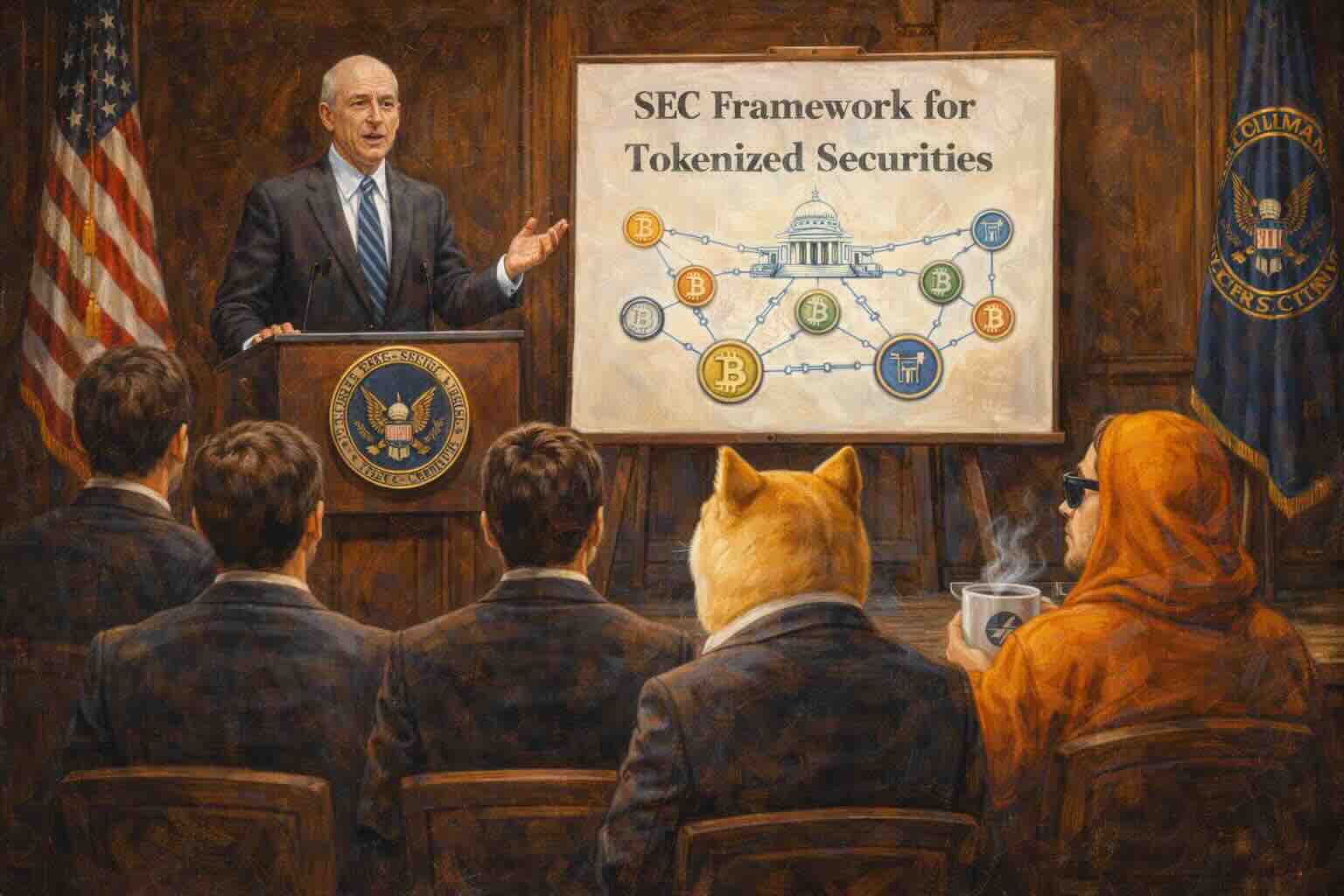
On January 28th, the SEC's Division of Corporation Finance, Division of Investment Management, and Division of Trading and Markets jointly released guidance clarifying how federal securities laws apply to tokenized securities. The statement defines a tokenized security as any financial instrument under existing securities law that is represented by a crypto asset.
The SEC outlined two primary categories: issuer-tokenized securities (created by or on behalf of the original issuer) and third-party tokenized securities (created by unaffiliated parties). For the latter, the agency distinguished between custodial and synthetic models. The custodial model is where the token represents actual ownership of the security. On the other hand, the synthetic model represents where tokens provide price exposure without conveying ownership. The SEC emphasized that holders of synthetic tokens face additional risks, including bankruptcy exposure to the third-party issuer.
This guidance builds on a December 2025 no-action letter to the Depository Trust Company (DTC), granting three-year relief for the DTC to offer tokenization services for highly liquid assets. This includes Russell 1000 stocks, major ETFs, and U.S. Treasuries. The DTC plans to pilot offering tokenized securities in mid to late 2026.
Our Take
Regulatory ambiguity for digital assets has long been one of the biggest barriers keeping traditional institutions on the sidelines. This guidance directly addresses that. By clarifying that tokenized securities fall under existing securities laws, and by distinguishing between custodial and synthetic structures, the SEC has given compliance teams something concrete to work with.
This guidance should be yet another tailwind for institutional crypto adoption. BlackRock and J.P. Morgan have already launched tokenized money markets on Ethereum. We expect to see new entrants now that the regulatory framework is better defined, along with an expansion of product offerings from incumbents who have been waiting for clearer rules before scaling.
As was mentioned in the NYSE and Robinhood article, this announcement builds our overall conviction that crypto and blockchain technology will have a significant role in the future of finance. The question simply remains where will these new venues be created and which tokens, if any, stand to accrue the most value as Wall Street transfers trillions of dollars onchain.
About Triple Point Strategy
Triple Point Strategy is a research firm and crypto investment manager. We operate the Marietta DeFi Fund, a crypto investment fund that is focused on capital appreciation and DeFi-native income strategies. It is currently available to U.S. accredited investors. Subscribe below to receive our latest insights directly in your inbox.
For U.S. accredited investors only. Offered under Rule 506(c) of Regulation D. This content is for informational purposes only and does not constitute financial, investment, or tax advice. This is not an offer to sell or a solicitation to buy any security. Any investment may only be made through the Fund's confidential offering documents. Investing involves risk, including possible loss of capital. Digital assets are volatile and subject to changing regulations.